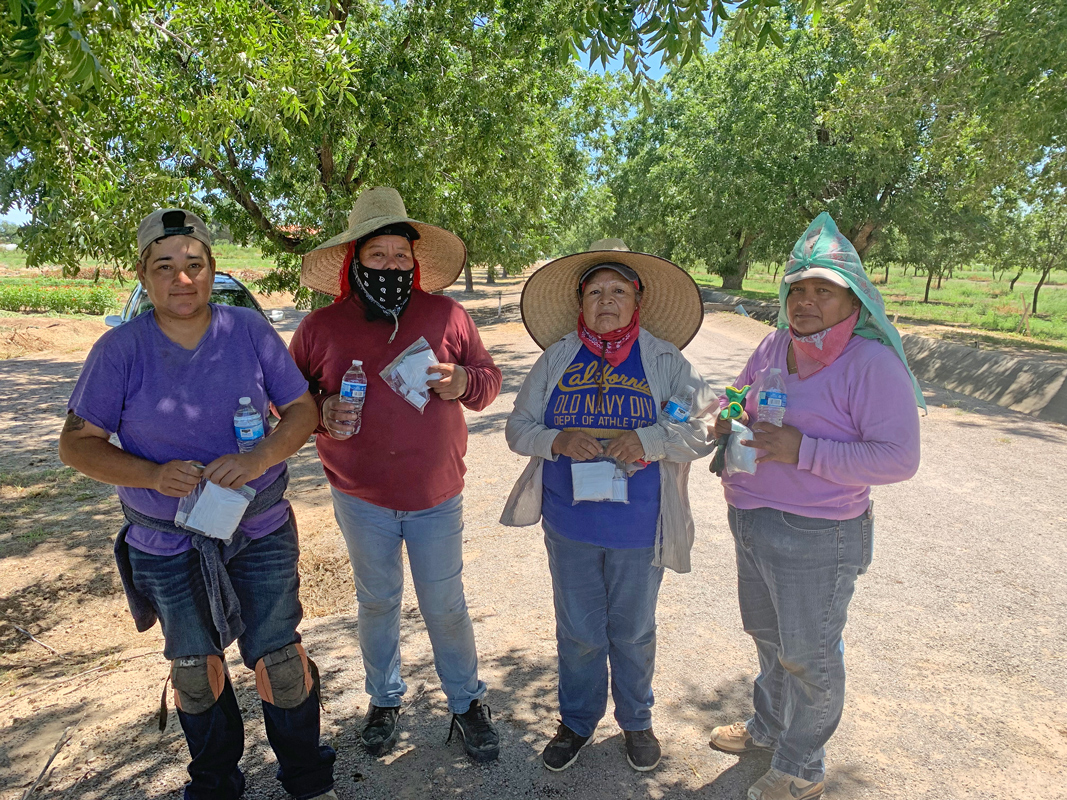
National Center for Farmworker Health (NCFH)
NCFH has developed four tools to help health centers assess health-related needs for MSAW communities and navigate health resources.
NACHC, AAPCHO, and OPCA
Resources by National Association of Community Health Centers (NACHC), Association of Asian Pacific Community Health Organizations (AAPCHO), and Oregon Primary Care Association (OPCA)
NACHC, AAPCHO, and OPCA developed this screening tool as part of a national effort to help health centers and other providers collect the data needed to better understand and act on their patients’ health-related needs.
Centers For Medicare & Medicaid Services (CMS)
Everyone Project by AAFP
- Health Related Needs Screening Tool: A questionnaire for screening core health-related needs, which include housing, food, transportation, utilities, and personal safety, using validated screening questions.
- Guide to Social Screening: A guide outlining the importance of screening for health-related needs and the rationale for the questions included in the screening forms.
- Neighborhood Navigator: A website that allows users to search by zip code for resources and programs in their neighborhood to address health-related needs. It provides information on food, housing, goods, transportation, health care, education, employment, and more.
- Action Plan: a quick form to guide a discussion with your patients about their health-related needs and document a plan to address them. The form is available in seven languages.
Health Leads
- Health Leads Screening Toolkit: a comprehensive toolkit on screening patients for health-related needs based on recent guidelines from the Institute of Medicine (IOM), Centers for Medicare & Medicaid Services (CMS), and the Centers for Disease Control & Prevention (CDC).
LOINC
- WellRx Questionnaire: a questionnaire form to assess economic stability, education, neighborhood and physical environment, and food.
American Hospital Association
Additional Tools
- Findhelp: Find food assistance, help paying bills, and other free or reduced-cost programs in the United States.
- 211: The 211 network in the United States responds to more than 14 million requests for help every year. Most calls, web chats, and text messages are from people looking for help meeting basic needs like housing, food, transportation, and health care.
- AAFP Neighborhood Navigator: A tool to enable patients to locate services that meet their health-related needs on their own. Neighborhood Navigator, powered by Aunt Bertha, supports more than 100 languages and integrates with Google Maps to provide users with step-by-step directions to community resources.
- Cap4Kids: CAP4Kids (The Children’s Advocacy Project) was developed in 2005 as a way for health care providers, social workers, child advocates, and parents and teens to find reliable, up-to-date information on community resources to help improve and enhance the lives of children and families.
- Feeding America: The Feeding America network is the nation’s largest domestic hunger-relief organization, working to connect people with food and end hunger. Donors, staff, and volunteers all play an important role in our efforts to end hunger in the United States.
- Supplemental Nutrition Assistance Program: SNAP provides nutrition benefits to supplement the food budget of needy families so they can purchase healthy food and move towards self-sufficiency.
- Special Supplemental Nutrition Program for Women, Infants, and Children (WIC): The Special Supplemental Nutrition Program for Women, Infants, and Children (WIC) provides federal grants to states for supplemental foods, health care referrals, and nutrition education for low-income pregnant, breastfeeding, and non-breastfeeding postpartum women, and to infants and children up to age five who are found to be at nutritional risk.
- Public Housing and Voucher Program: Public housing was established to provide decent and safe rental housing for eligible low-income families, the elderly, and people with disabilities. Public housing comes in all sizes and types, from scattered single-family houses to high-rise apartments for elderly families. There are approximately 1.2 million households living in public housing units, managed by some 3300 PHAs. The housing choice voucher program is the federal government’s major program for assisting very low-income families, the elderly, and the disabled to afford decent, safe, and sanitary housing in the private market. Since housing assistance is provided on behalf of the family or individual, participants are able to find their own housing, including single-family homes, townhouses, and apartments.
- Benefit Finder questionnaire: The official benefits website of the U.S. government includes information for citizens to identify benefits that they may be eligible to receive, and application information. Benefits address a variety of needs, including food/nutrition, health care, housing and utilities, childcare, and tax assistance.
- One Degree: Free online tools to help you find low-cost or free resources in a variety of locations across the United States: Nine counties of the Bay Area, Los Angeles County, Southwest New Mexico (Grant, Hidalgo, and Catron Counties), Summit County Colorado, Detroit, Michigan, Gainesville, Florida, and New York City, New York.